
NEWS | Signing of 14 Conservation Agreements in Batumi
Updated: Aug 4
Fourteen New Agreements Set the Stage for Stronger Conservation in 2025.
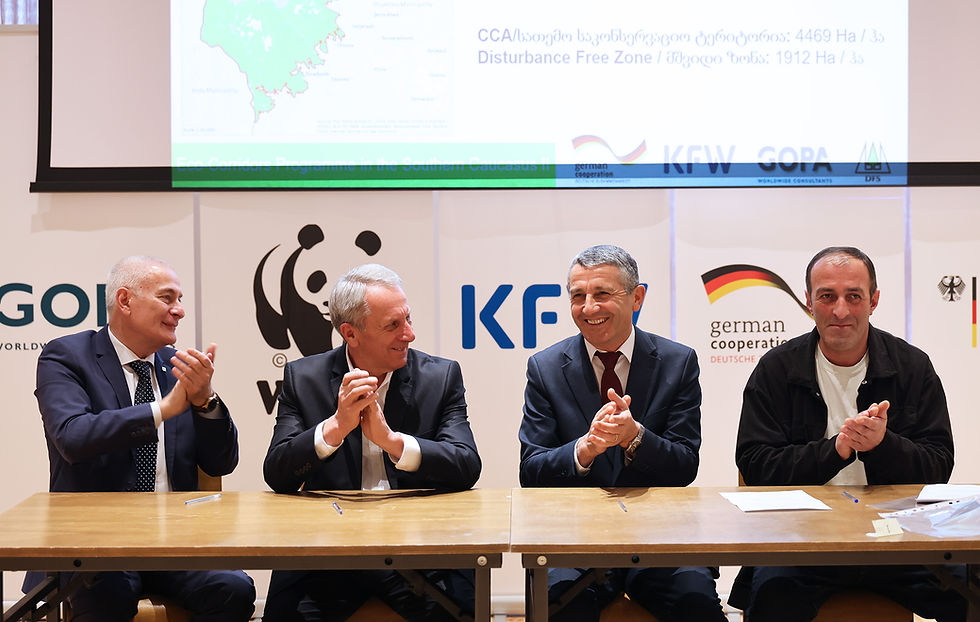
Outside the Rooms Hotel, in Batumi, Georgia, one could see the fresh snow on the peaks of the Caucasus on a crisp, sunny winter day following days of rain. A gathering of people reflected this sunlight in optimism and excitement. A mix of community-based organisation (CBO) leaders, local community members, municipal officials and government representatives milled about, swapping stories of the year and the challenging yet rewarding work of protecting, preserving and connecting landscapes and ecosystems. Laughter, firm handshakes and honest discussions; this is the human side of conservation that doesn’t always make it into reports but is essential for the success of the Eco-Corridor Fund for the Caucasus (ECF).
Inside the hotel, the mood was equally celebratory. On 3 December 2025, 14 Conservation Agreements (CAs) were formally signed by leaders from three municipalities – Shuakhevi, Khulo, and Adigeni – marking a major milestone in community-led conservation in Georgia. CBO representatives, municipal authorities, the Ajara Forestry Agency and WWF signed the agreements. Together, these agreements strengthen local stewardship of forests, pastures, and wildlife habitats, while supporting sustainable livelihoods and connecting key eco-corridors across the region.
“The beautiful and rich mountain landscapes of the Western Lesser Caucasus are the result of millennia of local people living in harmony with nature,” said Jernej Stritih, ECF Chief Technical Advisor. “The financial support provided by Germany through the Conservation Agreements signed today will help local communities to preserve these landscapes and biodiversity for the next generations and for humanity.”
The ceremony was a chance not only to formalise these agreements but also to celebrate the people behind the work. After the signing, participants joined for a joint meal. For those on the ground, the signing is just the beginning, the real work continues in coming months and years, but as those who have been involved in the first phase of the ECF have recounted, it is rewarding and important work that feeds into strong communities and healthy ecosystems. The agreements are not just pieces of paper, they are a commitment by the people living in these regions to protect biodiversity, manage their land sustainably, and tackle human-wildlife conflict, all while improving livelihoods. This is where the true impact of ECF lies: in the hands and hard work of the communities themselves. Boots on the ground, eyes on the future, and a shared vision for a living, connected landscape in the Caucasus.

*


